
TSN AI Price Prediction
Track TSN's AI-powered predictions, market trends, and investment insights.
Mock Tradesimulated, no real money
You don't hold TSN in your mock portfolio yet.
Track TSN's AI-powered predictions, market trends, and investment insights.
You don't hold TSN in your mock portfolio yet.
Upgrade to see the full Evidence Stack
What Changed, Why Now, and Risk Flags — available on the Investor plan and above
Get StartedThe valuation metrics provided (PE of 44.46 on EPS of 1.27) suggest Tyson Foods is trading at a premium relative to its current earnings power, which is high for a mature, cyclical food producer. This likely reflects either depressed current earnings or market expectations of a meaningful earnings recovery. Without detailed revenue and margin history, the data points to a company in a low-profitability phase with expectations for improvement, but not yet clearly reflected in results.
The stock is trading at $56.47, down 15.6% over the last month and below its 200-day moving average of $59.40, indicating a negative short-term trend and technical weakness. Trading below the 200-day average typically signals a bearish or corrective phase, especially when combined with a sharp recent drawdown. Without a specific RSI value, the price action alone suggests selling pressure and cautious sentiment in the near term.
Alternative data for Tyson Foods is mixed but generally stable, with modest positive signals on hiring and professional-network presence, and largely flat or slightly negative consumer-facing engagement. Job openings are up 2.3% month over month, which can indicate continued investment and operational activity, while social media metrics show small, incremental changes rather than strong momentum. Overall, these signals suggest a steady but not strongly accelerating business backdrop.
Overall, Tyson Foods appears to be in a transition phase where current earnings are relatively weak, the stock has recently sold off and trades below key technical levels, yet the valuation still embeds expectations of earnings recovery. Alternative data shows a stable operational and brand footprint but not a clear acceleration in demand or engagement. Taken together, the picture is more neutral than clearly bullish or bearish, with the balance of risks hinging on whether earnings can improve to justify the current multiple.
Our AI Score rates companies on a scale from 0 to 10, based on alternative data points such as web traffic, app downloads, and job postings — combined with financial health indicators and technical signals.

Tyson Foods Names Wes Morris Chief Operating Officer
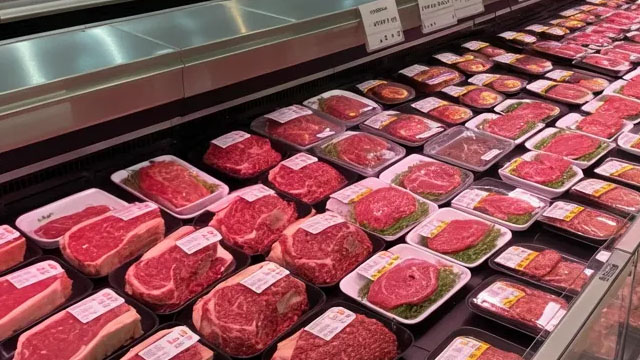
Tyson Foods: Beef Remains A Drag, But The Long-Term Thesis Is Intact
Tyson Foods (TSN) is trading at $65.05 on the NYSE, logging a single-day decline of 2.1% with volume of approximately 2.03 million shares. The company carries a market capitalization of $23.2 billion, reflecting its position as one of the largest protein processors in the world. Operating across Beef, Pork, Chicken, and Prepared Foods segments, Tyson's diversified model provides some revenue stability, yet the stock's recent dip signals near-term selling pressure that investors should monitor closely heading into the rest of 2026.
TrendEdge's AI model assigns TSN a score of 5 out of 10 — a neutral reading that suggests neither a strong buy nor a clear sell signal at current levels. This midpoint score reflects a balance between Tyson's established market position and scale against headwinds such as commodity input cost volatility, margin compression in protein processing, and limited near-term momentum signals in the data. With only one Reddit mention recorded in the past seven days and minimal social sentiment data available, retail investor engagement appears subdued, providing little speculative tailwind to the stock.
Key catalysts to watch for TSN in 2026 include protein commodity price cycles — particularly beef and chicken — which directly compress or expand segment margins. The company's 546 active job postings suggest ongoing operational investment, which could indicate capacity expansion or elevated turnover costs. Investors should track quarterly segment profitability, especially in Beef, which has historically been the most volatile. Input cost trends, consumer spending on protein, and any strategic moves in value-added Prepared Foods will be critical for re-rating the stock above its current neutral AI score.
Unlock comprehensive alternative data signals to make better investment decisions
TrendEdge provides tools and data for research and educational purposes only and does not provide investment advice or personal recommendations.
Web Traffic
149,613
Twitter Followers
56,416
Instagram Followers
26,123
YouTube Subscribers
6,890
LinkedIn Followers
373,624
Job Postings
561
LinkedIn Employees
44,174
News Mentions
0
Key Metrics