
Washington Trust elects Jeffrey M. Wilhelm to Board of Directors
. prnewswire.com
Track WASH's AI-powered predictions, market trends, and investment insights.
You don't hold WASH in your mock portfolio yet.
Upgrade to see the full Evidence Stack
What Changed, Why Now, and Risk Flags — available on the Investor plan and above
Get StartedWith EPS at 2.74 and a PE ratio of 10.95, Washington Trust appears reasonably valued versus typical bank-sector multiples, suggesting neither clear distress nor strong growth expectations. The earnings level implies the business is solidly profitable, but the modest multiple points to market concerns about growth, interest-rate sensitivity, or credit risk. In the absence of detailed revenue and margin trends, the profile looks like a mature, cyclical regional financial name rather than a high-growth story.
The stock at $30.00 is trading just below its 200-day moving average of $30.41, signaling a slightly negative but not strongly bearish long-term trend. A 9.5% decline over the last month shows recent selling pressure, yet the proximity to the 200-day average suggests the stock is near a potential support or decision zone rather than in a clear breakdown. Valuation (PE ~11) does not appear stretched, so price action looks more like consolidation under macro or sector pressure than a company-specific collapse.
Alternative data for Washington Trust show softening operational and demand-side indicators. Job openings are down 39.3% month over month, which can signal cost-cutting or a cautious growth stance. Web traffic is modest and social media followings are small, with only slight growth on most platforms and a small decline on Twitter/X, pointing to limited digital engagement and muted organic demand momentum.
Overall, Washington Trust’s stock setup is neutral: fundamentals appear reasonably sound with a mid-range PE and positive EPS, but recent price weakness and soft alternative data temper enthusiasm. The shares trade just below the 200-day moving average, placing them at a technical inflection point where macro conditions and sentiment will likely drive the next move. Without clear evidence of accelerating growth or strong demand signals, the risk/reward skews toward a wait-and-see stance rather than a strongly bullish or bearish view.
Our AI Score rates companies on a scale from 0 to 10, based on alternative data points such as web traffic, app downloads, and job postings — combined with financial health indicators and technical signals.
Washington Trust elects Jeffrey M. Wilhelm to Board of Directors

Washington Trust Bancorp, Inc. (WASH) Q1 2026 Earnings Call Transcript
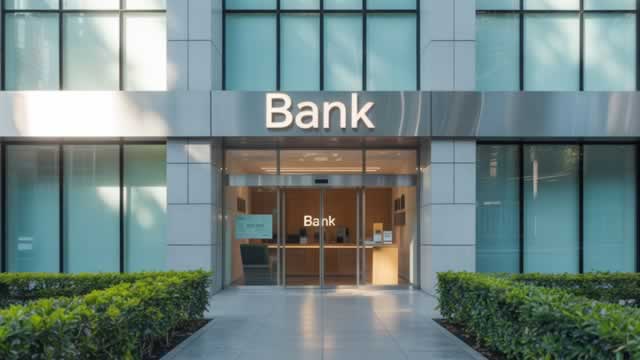

Washington Trust Bancorp (WASH) is currently trading at $33.40 on the NASDAQ, with a modest single-day gain of 0.50%. The regional bank holding company carries a market capitalization of $636.8 million, placing it firmly in small-cap territory. Daily volume of 128,992 shares reflects relatively subdued trading activity, suggesting limited institutional momentum at current levels. Operating through its Commercial Banking and Wealth Management segments, Washington Trust serves both individual and business clients across New England, with The Washington Trust Company of Westerly as its primary banking subsidiary.
TrendEdge's AI model assigns WASH a score of just 3 out of 10, signaling a predominantly bearish outlook for the stock in 2026. This low score reflects weak quantitative signals across the monitored data set. With only 14 active job postings, the company shows minimal expansion activity, suggesting a conservative or cost-conscious operational posture. The absence of measurable web traffic trends and app download data further limits positive signal generation. For a regional bank competing in a rate-sensitive environment, the AI model's assessment points to underwhelming near-term momentum and limited near-term upside catalysts.
Investors watching WASH in 2026 should monitor interest rate policy closely, as regional banks with commercial real estate and mortgage exposure remain highly sensitive to Fed decisions. Wealth management revenue could provide a partial offset if equity markets hold up. The bank's modest hiring footprint — just 14 open roles — warrants attention as an indicator of organic growth ambitions. Any material shift in credit quality across its commercial mortgage or construction loan portfolio would represent a key downside risk worth tracking.
Unlock comprehensive alternative data signals to make better investment decisions
TrendEdge provides tools and data for research and educational purposes only and does not provide investment advice or personal recommendations.
Web Traffic
117,788
Twitter Followers
619
Instagram Followers
1,540
LinkedIn Followers
4,814
Job Postings
17
LinkedIn Employees
535
News Mentions
0
Key Metrics